Jan 9, 2015

Small shrines

 This is the front view of the little private shrine that I showed yesterday. From the front, I could see that inside were two drinks and a small stone. The kanji, Chinese characters, carved into the stele gives the name of the family to which the shrine is dedicated.
A little further down the road, I found another private shrine. This one was even smaller but was on private property and facing away from the road so I could see no more than the outer shape of the little building.

Jan 8, 2015

Along the road

 Brick walls or any other sort of brick construction is quite unusual in Japan, so I was surprised by this long chest high wall. The reason that brick is seldom used is that brick structures are very weak and tend to collapse during earthquakes and all of Japan is subject to frequent tremors.
A little farther along the road, I came to this Shinto shrine. Apparently it is a private shrine. The greenery was fresh so someone is taking care of it. However, the little wooden building was empty.

Jan 7, 2015

Still at the shrine

 This is the main door to the altar, in fact at this shrine because of the small size, it is the only door. The white area that you can see inside is a mirror. Many shrines have a mirror as the main object on the altar. There seem to be a number of reason for the shrine, but the basic idea is that the mirror captures the essence of the person reflected in it. The earliest Japanese myths have the Goddess Amaterasu giving her mirror to her grandson and telling him that it contains her essence. Mirrors also ward off evil beings, because when they see themselves in the mirror, the horrible image scares them away. Also I think that there is also some idea of the worshiper seeing their own essence when looking into the mirror.
Beside the shrine is a cherry tree. The best trees have trunks that look like this, showing both their age and the hardships they have survived. The name of this shrine, if you will remember, was Kasuga or SpringDay. Cherry trees blossom in the spring and the flowers symbolize the sadness reflected by the short life of the beautiful blossoms, paralleling the short but beautiful life of humans.

Jan 6, 2015

More at the shrine

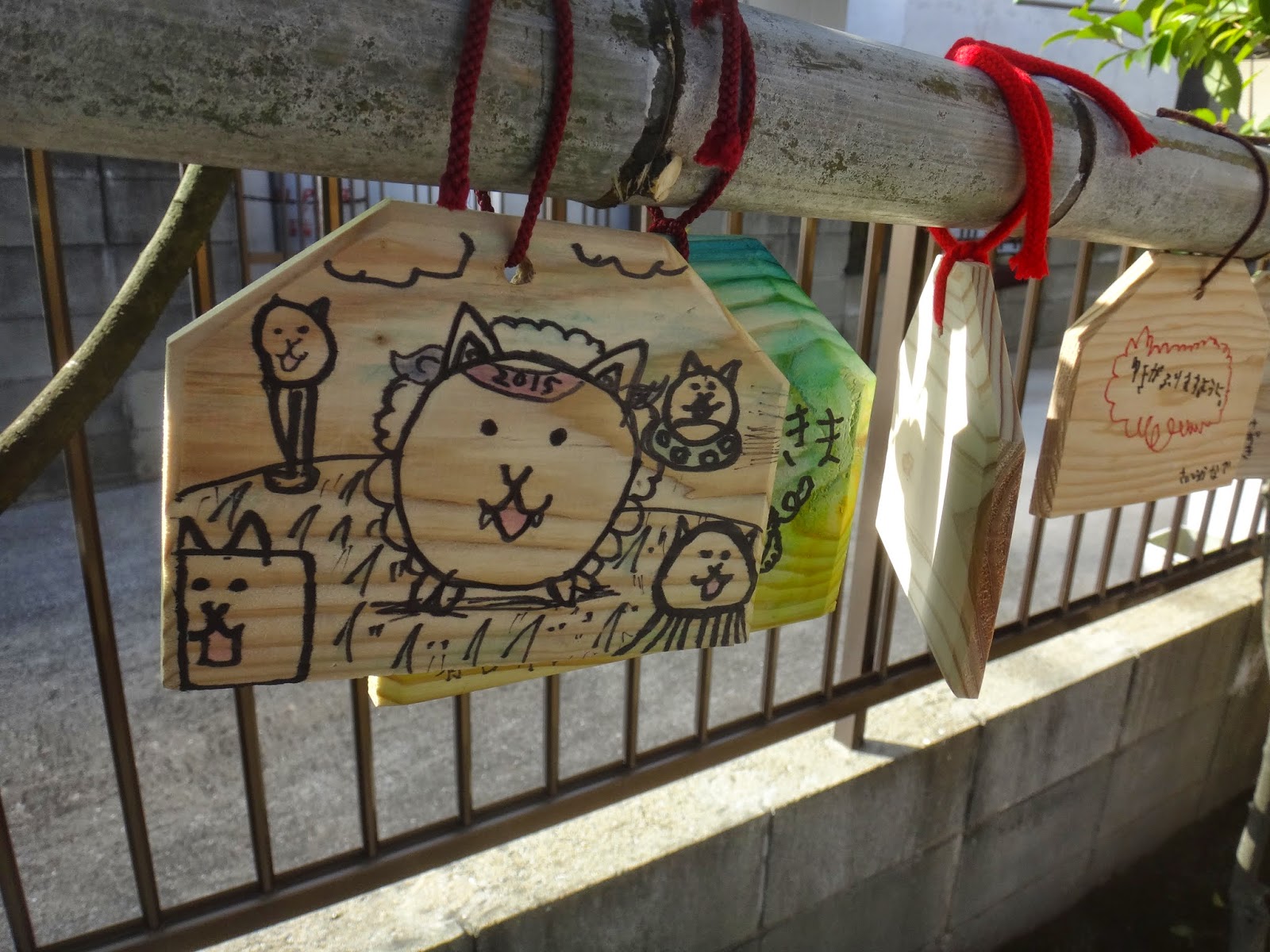
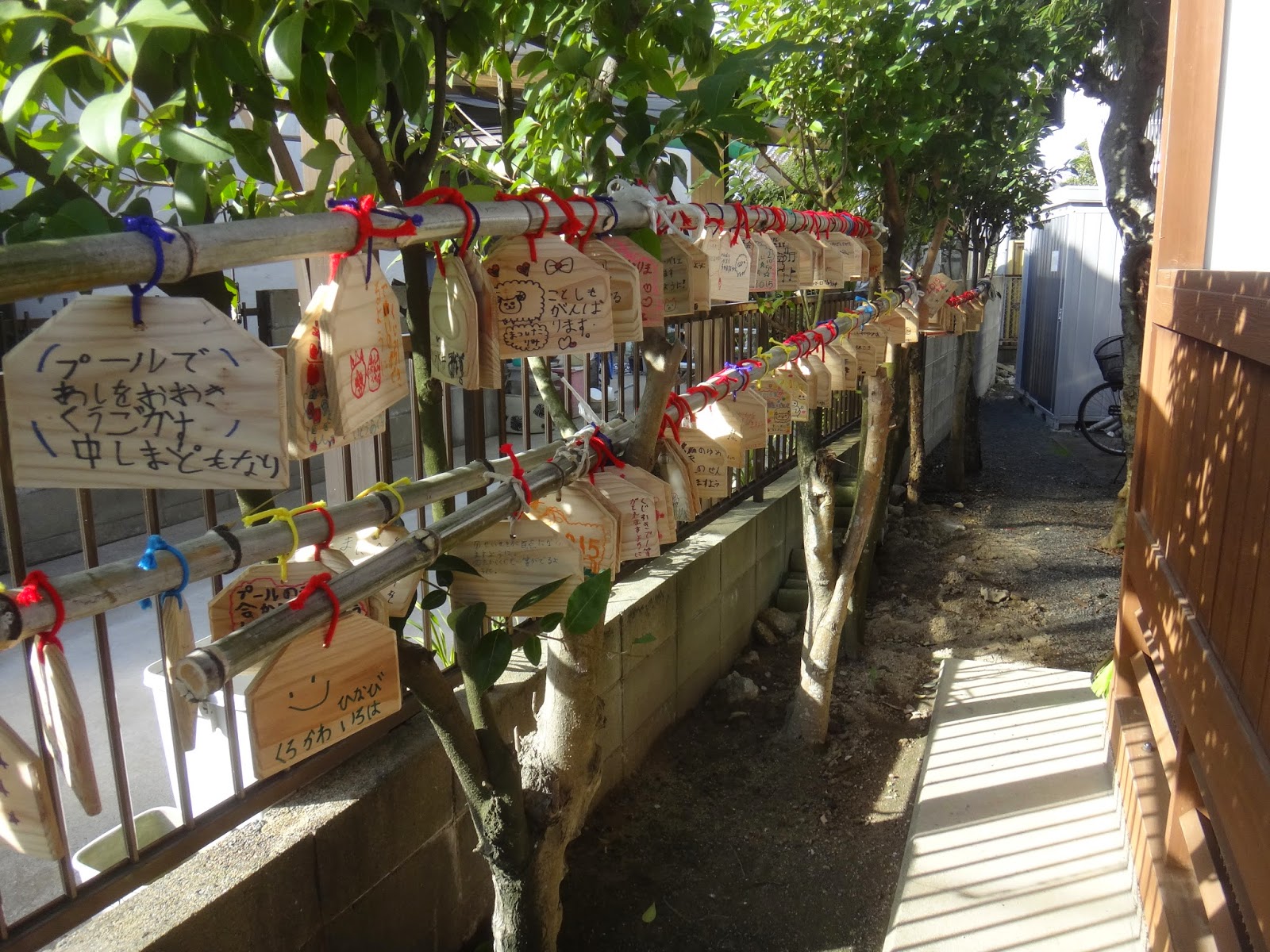
 Shinto shrines often have boards like these, called ema, where people write their wishes and leave them for the gods. This group were obviously made by children.
They covered covered the length of the fence and were probably made by students at a local kindergarten.

Many shrines are famous for a particular thing that the god might grant. For example, a large number of shrines are famous because students preparing for the college entrance exams leave ema asking that they be accepted at some university. Once the word spreads that students who leave ema have a high acceptance rate, more and more students arrive to leave ema and to greet the god at the altar where they leave a small offering of money. It is the thought that counts, not so much the amount.