Mar 12, 2012

Going to Toyama

 The views out the window were spectacular. Little villages nestled in the valleys and everything covered with snow.
 There were even rice paddies.
 After leaving the ski resort, there were very few other passengers. At each station one or two people would get on and the same number would get off, so the people on board were constantly changing.
 The walls along the track side were apparently placed there to keep the snow from piling up on the tracks.
 The roads that I could see were well kept. I could not tell how much was due to the water sprays or to plowing, but in any case the roads were clear.
 The rivers and canals were also clear, which must mean that the water is flowing in them.
 A factory, hidden behind the center, flat-roofed building, was apparently on fire.
 As we got nearer the coast, the rivers were wide but very shallow, which is typical of Japanese rivers.
I had to change trains again at the end of the line. From the line that came through, and under, the mountains, I would now board this train which would take me down the coast into Toyama Prefecture.

Mar 11, 2012

On the way to Toyama

 I got off at the station and looked around for the entrance to the other train line that I was supposed to take, but I could not find it anyway in the small station. So, I went to the ticket window and called out, asking if there was anyone there. After a short while, a man came out of a backroom. I asked where the entrance was and he said that there was none. After a bit more explanation, we discovered that I had got off at the wrong stop. He checked the schedule and found that there were no other trains that would allow me to make my connection, so he called the local cab company and after a short consultation with the dispatcher, order me a cab. While we were waiting, I asked him to pronounce the names of the two stations. Although they were completely different and in theory consisted of a different number of syllables, I could not tell the difference.

The cab arrived and after a radio discussion between the driver and the dispatcher he took me to a third station. My train would stop there after it stopped at the station where I originally planned to catch it. Again, I had the driver pronounce the names of the stations that I had mixed up and again I could not hear any difference, especially when there was a surrounding context. Anyway, I got to the third station more than twenty early and it only cost 1,200 yen, so there was no problem and I got to see a bit more of the countryside.

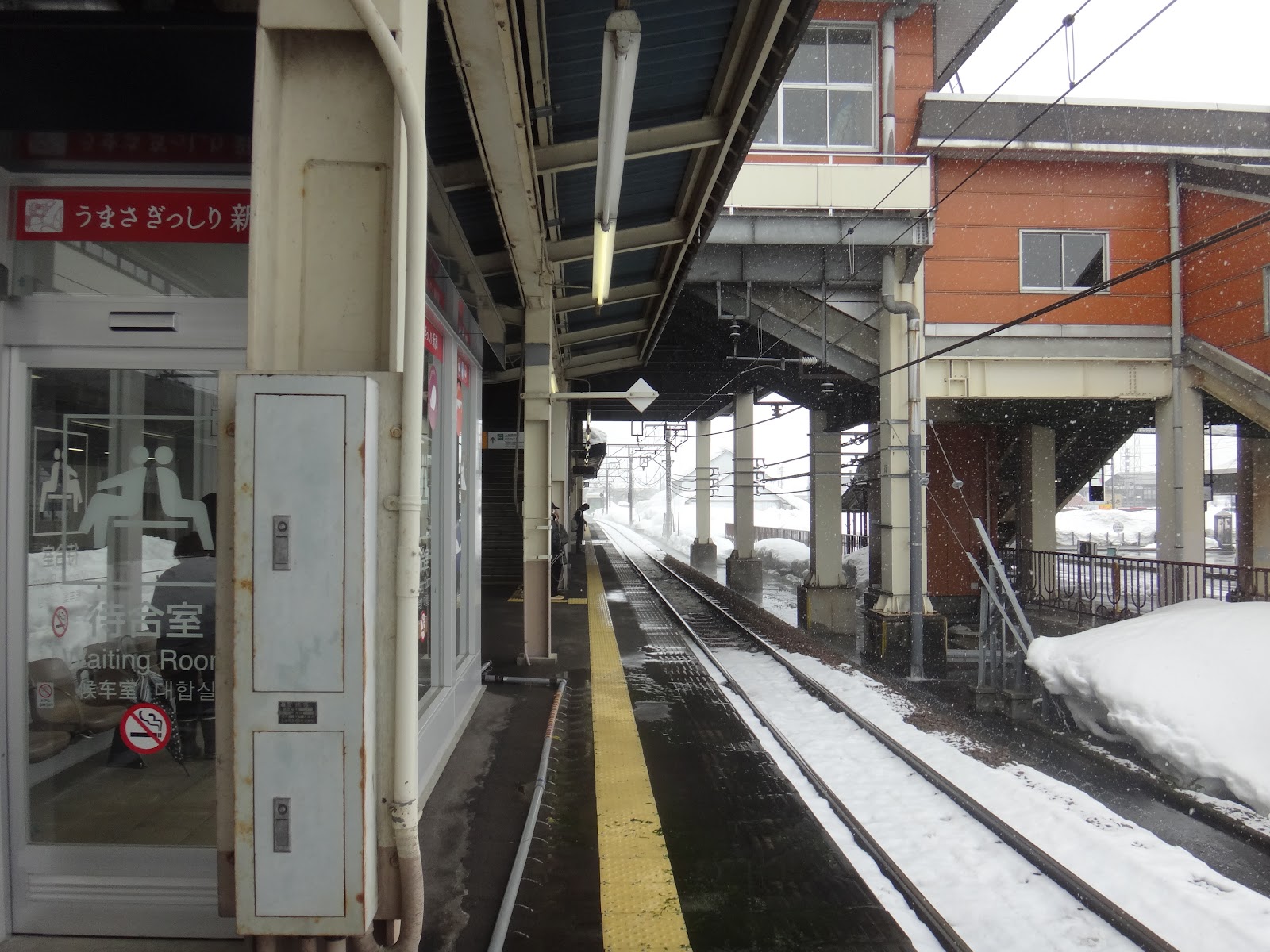
The station did not have an attendant. You just walked in and waited. There was a machine for buying a ticket but there was nothing to check if you had a ticket when you got off.
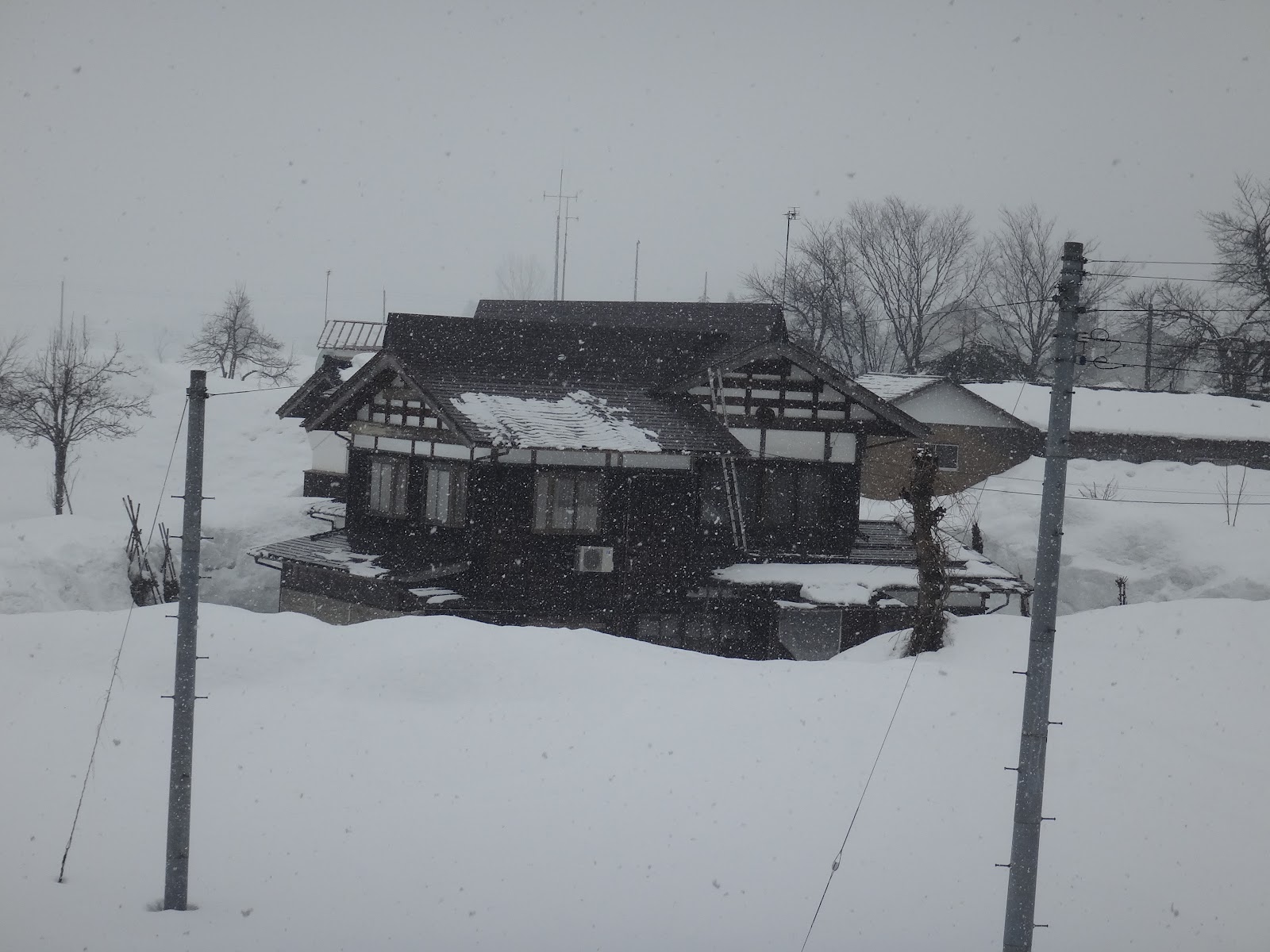
 I went out on the platform and looked around. Directly in front of me was this picturesque house.
 A little to the left was this group of trees.
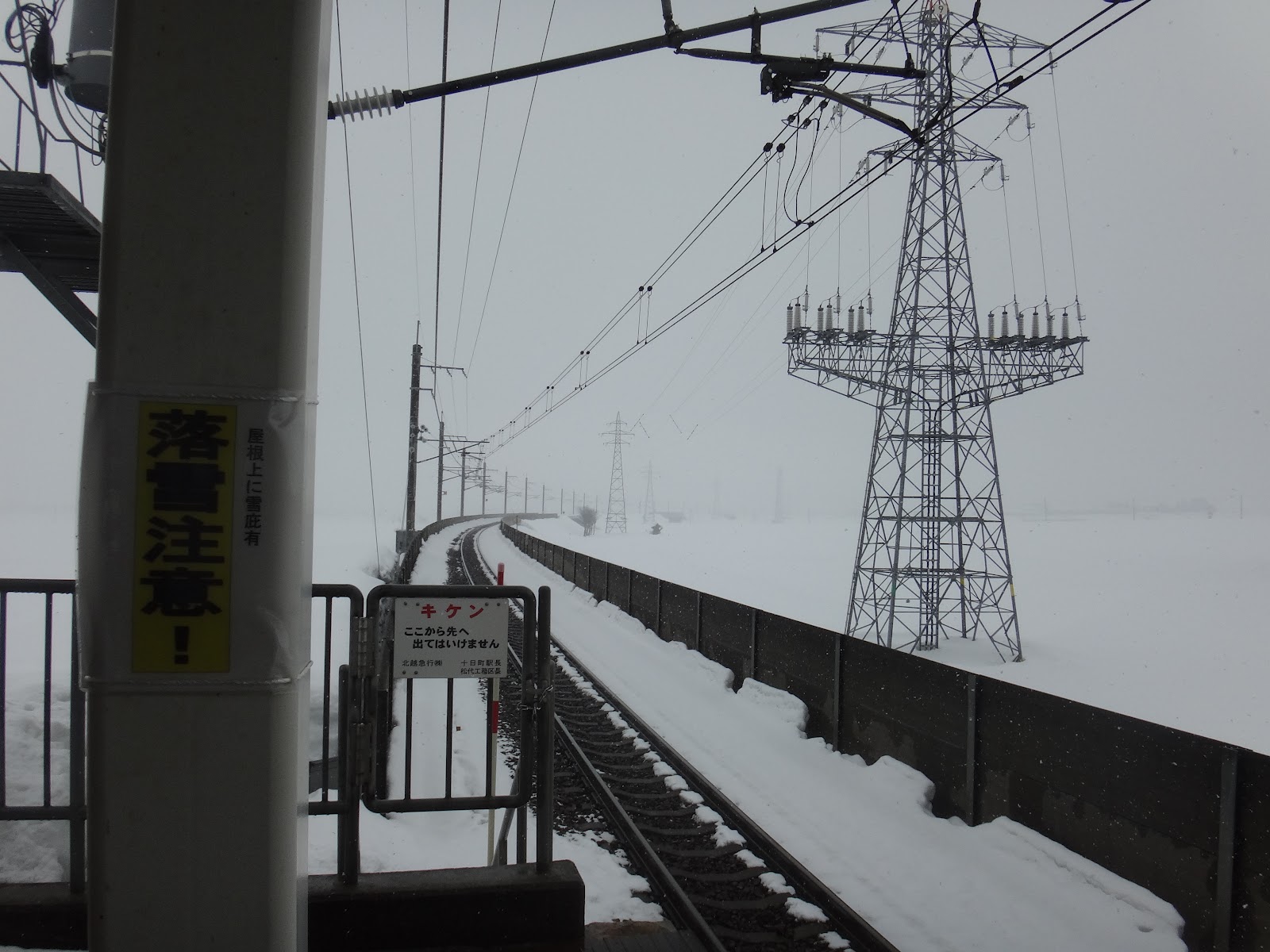
 This is looking up the track in the direction I was planning to go.
 This is in the direction that I should have come from. Notice that it had started snowing hard so the scenery in the distance disappeared entirely.

One thing you may not have notice. There is only one track. The trains run in both directions on the same track and they are only about five minutes apart. Scary but I decided that, since I had never heard of an accident on this line and it would have been big news, there would be no problem.
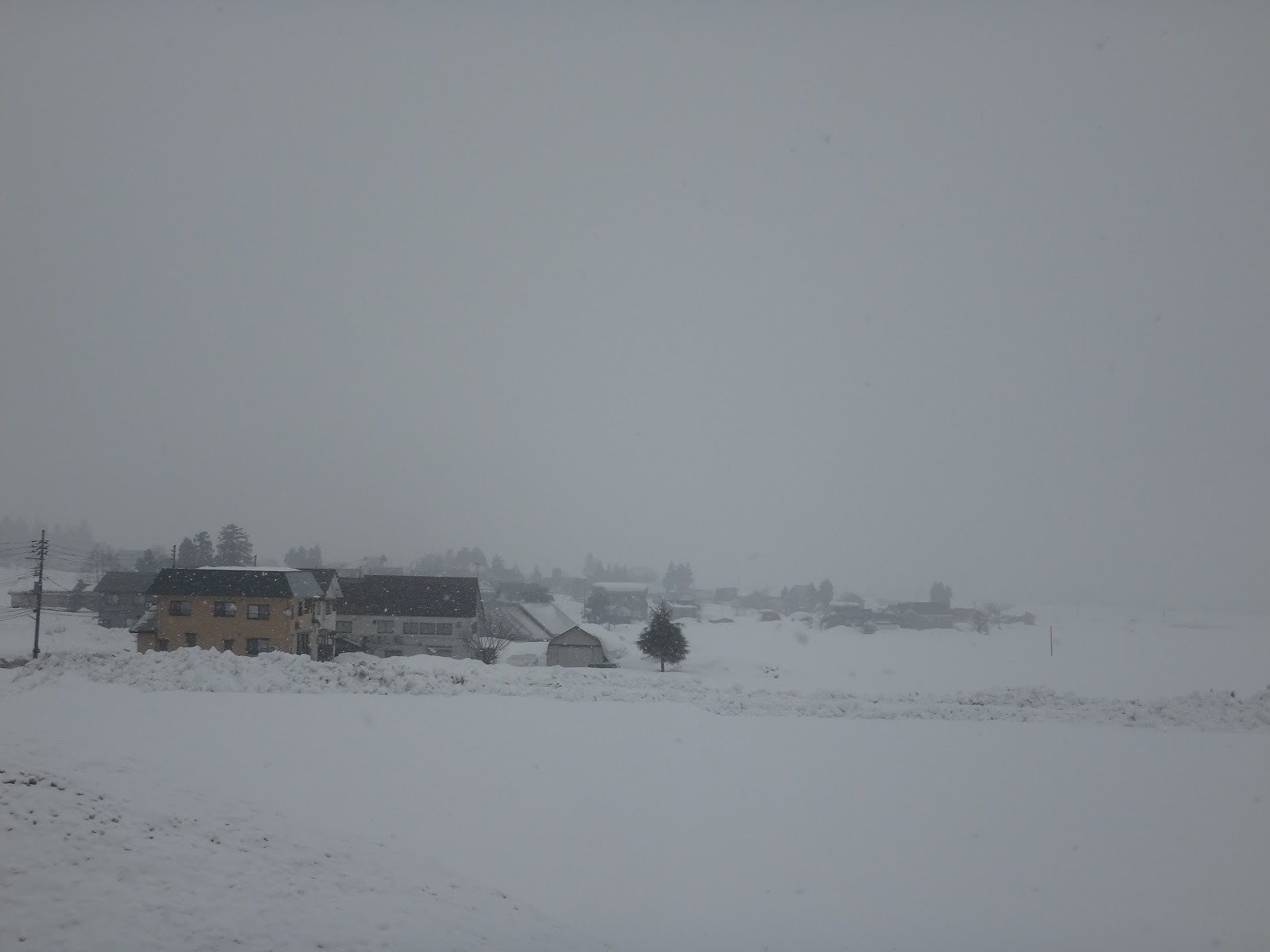
 I went outside and looked in the opposite direction and saw more farmhouses, and more snow.

 My train consisted of only two cars, but it was clean and fairly new. Here most of the riders were getting off at a station next to a ski resort.
I took this picture out the window on the opposite side of the train. The white streak in the sky is a reflection on the window, not a UFO.

Mar 10, 2012

Leaving Urasa

 Just outside the temple, I notices that then end of a wall had an animal of some sort carved into the post.
 We, Tony and I, walked back to the station, stopping for lunch on the way. At the corner in front of the station, there is a stone post with a cave carved into the top. Inside is this little Buddhist statue.
 This was the view looking back up the street toward the temple.
 One thing that I always notice when exploring a new area is the large number of open canals and ditches. There are a result of 1,500 years of improvements in the water distribution system so that it efficiently supports the rice paddies, and also drains the built up areas.
 As always I was fascinated by the decorations in the men's room. This was over the sink.
 Back at the station, we found a banner containing the name Bishamonten and a symbol representing him.
 Inside the station building, I found this alto-rilievo, or high-relief, sculpture on the wall. It was inside the Shinkansen area and I was leaving on a local train so I could not get a better picture of it.
 I had to wait for about 15 minutes. I was just going a short distance to another station where I could catch a train that would go under the mountains and take me to the coast of the Japan Sea. From there I would travel west along sea to Toyama Prefecture, where I would meet my wife and visit with my brother-in-law and his wife.
My train arrived and I hoped on.

Mar 9, 2012

The Bishamon Temple

 Here is a closer look at the Bishamon statue. This is a bit unusual because usually Bishamon is shown with a spear in one hand and a pagoda in the other. Here he has a container of some sort and golden jewels are pouring from it, probably a reference to the spring.
 Another stele mostly covered with snow and with the winter braces in place.
 There was a tourist group on the grounds. They were getting a guided tour. Sometimes I attach myself to the end of such groups to hear what the tour guide has to say, but on this day I did not.
 From the front of the main building, I could see that the side building was connected to it by a covered hallway. This side building is probably a meditation hall.
 The snow is about a meter deep and, if you step off the beaten path, you sink to your knees. On the path the snow has been stepped on enough that it is hard and you can walk on it, although it was slippery.
 I love these complicated roof supports. They are made of lots of separate pieces that are held together by the weight of the roof. You will notice that it had started snowing again.
 Inside the main building, I found what I thought was a picture of a dragon, but on closer inspection it was the dried bodies to two poisonous snakes. Tony told me that they live in the hills behind the temple.
 On one side of the main altar, there was a large collection of small statues. I have no idea who or what they represent. Buddhist statues are usual personifications of specific human traits.
On the other side there was a well dressed statue, apparently dedicated in some way to children. I believe this because of the small statues in front as well as the toys.